Somatic EMDR Therapy
Rooted Trauma Recovery


Somatic EMDR In Bellingham, WA + Extended Sessions for Seattle Clients
Move through what holds you back. Reclaim self-trust and meaning after trauma.
In the midst of devastating loss, a part of you begins to believe you don’t deserve support.
You tell yourself others have it worse, or that you should be over it by now. You might retreat from life, hoping time will mend your heartbreak. It’s hard to imagine returning to the world after life betrayed you in a way you never thought possible. Traumatic loss leaves traces that are not only emotional but physiological, disrupting your ability to feel present, safe, and connected.
When heartbreak remains unresolved, your body freezes in time.
You might find yourself moving through life in fragments, detached from reality, dulled in emotion, unable to feel joy even when you try. Over time, it can start to seem like your pain is too much for others to hold, or that you are somehow to blame. Life does not have to stay this way. At Intra, we promise to honor your suffering, and your innate resilience.
Somatic EMDR can help you break free from:
Chronic regret for past decisions
Constant burnout
Eroding confidence
Preoccupation with the life unlived
People-pleasing tendencies
Emotional distance in relationships
A persistent sense of emptiness

How it Works
Your body is carrying what your mind could not.
Feeling stuck in a fog after a loss or withdrawn during ongoing grief doesn't mean you're weak. It means your loss was too much to comprehend all at once.
Your mind compartmentalized your body’s pain to help you survive. Somatic EMDR restores this essential communication so you can integrate your loss and move forward, with or without closure.
The human brain is designed to overcome hardship, but the body needs to be invited into the process. We'll honor the pace your nervous system needs to feel safe, grounded, and present. Your mind’s creative intelligence can only emerge once your body feels connected and secure.
Traditional EMDR (Eye Movement Desensitization and Reprocessing) alleviates distress from traumatic memories through bilateral stimulation such as eye movements, tapping, or alternating sounds. While EMDR is proven effective, Somatic EMDR goes deeper by recognizing the body as central to healing complex trauma and loss.
From Overwhelm
To Connection
Together, we'll turn toward your felt experience rather than overriding your body's signals. You'll learn techniques to:
→ Build awareness of internal and external resources
→ Create relational safety
→ Witness your inner experience without judgment
→ Strengthen your capacity to be with challenging emotions
→ Ease into tender places without panic or shutdown
Somatic EMDR helps your nervous system reconnect with what once felt too overwhelming to process. Through body-based awareness and trauma reprocessing, you can integrate fragmented experiences and restore inner safety, meaning, and embodied presence.
Our Process
1. Complete an Inquiry Form
Before we begin, you’ll be asked to complete a brief inquiry form. This helps me get a clearer sense of who you are, what you’re seeking, and how I can best support you.
2. Intake Process and Preparation
During your intake process, we’ll explore a rough outline of your treatment plan and what to expect. We’ll establish your goals and lay the foundation for somatic EMDR.
3. In-Depth Extended Sessions
Once you have adequate resourcing, grounding, and regulation skills established, we will add on 100-minute somatic EMDR sessions for deeper processing.
Frequently Asked Questions
-
Traumatic memories can get stuck in the brain. Parts of you stay frozen in the moment it happened. Instead of recognizing the past as over, your brain and body react as if the trauma is happening now. EMDR helps your nervous system reprocess these experiences so they're stored as memories, not ongoing threats. Over time, the emotional charge softens. You can recall what happened without becoming flooded or disconnected.
-
Anyone struggling after experiencing trauma that disrupted the body-mind's capacity to adapt. You may experience:
· Emotional symptoms: Disconnection, fear, anxiety, panic, difficulty feeling comforted, anger, shame
· Psychological symptoms: Low self-esteem, feeling unreal, negative self-talk, self-blame, loss of interest in activities
· Relational patterns: Withdrawal, isolation, hostility, unexpressed resentment, emotional dysregulation
· Physical symptoms: Body tension, digestive issues, headaches, chronic pain
-
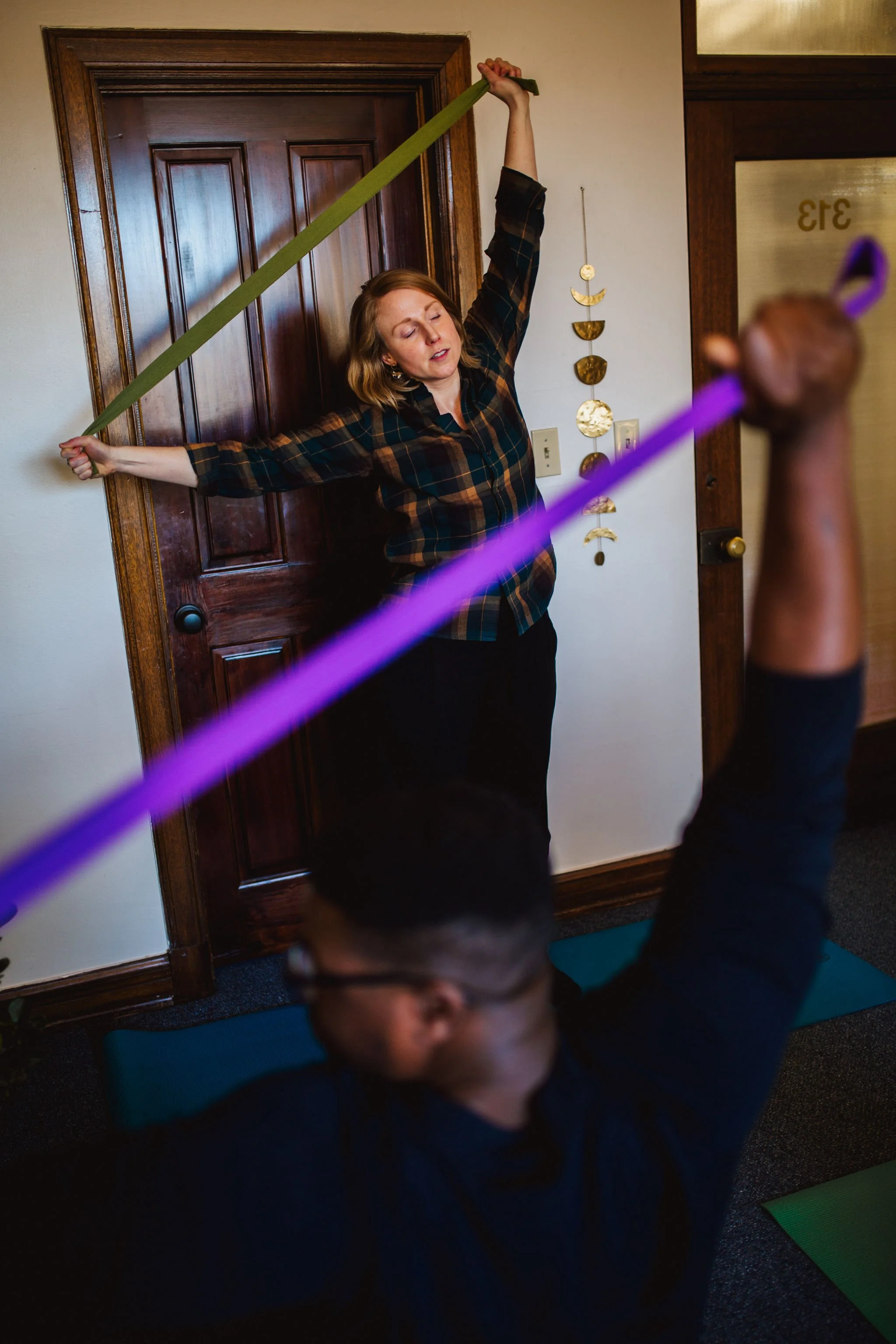
Somatic EMDR builds on traditional EMDR by centering the body in the healing process. Beyond eye movements or bilateral tapping, we incorporate full body movements such as twists, swaying, and intuitive gestures to release stuck trauma responses. These movements can happen while seated, standing, on a yoga mat, or while walking.
-
Yes. I offer virtual Somatic EMDR sessions to clients throughout Washington State, including Seattle, Tacoma, Bellevue, and Kirkland. Somatic EMDR translates well online. We still work with body awareness, movement, and bilateral stimulation through simple guided cues and at-home tools. If you prefer in-person, my office is in Bellingham, about 1.5 hours from Seattle and Vancouver, Canada
-
Bilateral movement asks your brain to do two things at once. You turn your attention toward a disturbing event, emotion, or sensation, while practicing a new behavior at the same time. This taxes working memory and creates novelty, which puts you in a learning zone. It stimulates neuroplasticity and allows your brain to update how old memories and stories are stored.
-
Somatic therapy is a broad approach. It includes body-based psychotherapies that treat the body as a valid source of information. Somatic EMDR is one specific intervention within that larger approach.
-
50 minute sessions are $240. For deeper trauma and grief processing, you have the option to add extended 100 minute sessions for $480.
-
I'm an out-of-network provider, so I don't work directly with insurance companies. You may have out-of-network benefits, worth calling to check. I'm happy to provide a superbill for you to submit for possible reimbursement. Sessions are paid upfront, with potential reimbursement through your insurance afterward.
-
Fill out my contact form to get started.