

Creating space to be
Centered in mind-body connection & spiritual restoration
“Until you make the unconscious conscious, it will direct your life & you will call it fate”
-Carl Jung


Rooted in Wisdom, Elevated by Innovation
If you could think your way out of your own suffering, you would have by now. True recovery from complex grief and trauma unfolds through the body, and within the safety of relationship.
At Intra, psychoanalytic depth integrates with modern, research-backed methods to create meaningful change at the emotional core. By maintaining a small caseload, I ensure that every client receives attentive, resourced care. This intentional approach provides the precision and quality needed for results that last.

Weekly Depth Therapy
Every client starts here. We identify the core pain and unconscious beliefs driving your patterns. From there, you'll develop the strength to be with discomfort instead of defaulting to self-protection.
When you understand what you're feeling, you gain clarity about what you need — and the power to make intentional, life-changing choices.
This isn't just a possibility. It's a commitment to change I witness in my clients every single week.
Still curious? Visit my depth therapy page to learn more.
Investment: $240 per 50 minute session
-
In the beginning of treatment, we’ll meet weekly. Once a strong therapeutic relationship is established, you’ll engage in a mind-body connection practice every fourth week, in place of talk therapy. Integration weeks empower you to tap into your inner resources between sessions, allowing for deep healing without the risk of burning out from therapy.
Depth therapy is ideal for those who benefit from long-term, weekly support. This approach is particularly helpful for those who:
Are new to therapy and ready to fully commit to the process because change is urgent.
Have previously tried cognitive-based therapies (thought work) but didn’t achieve the lasting results they were seeking.
Are in a stable enough place to commit to weekly sessions and do not require immediate crisis support.
Want to address deep-rooted psychological and emotional challenges.
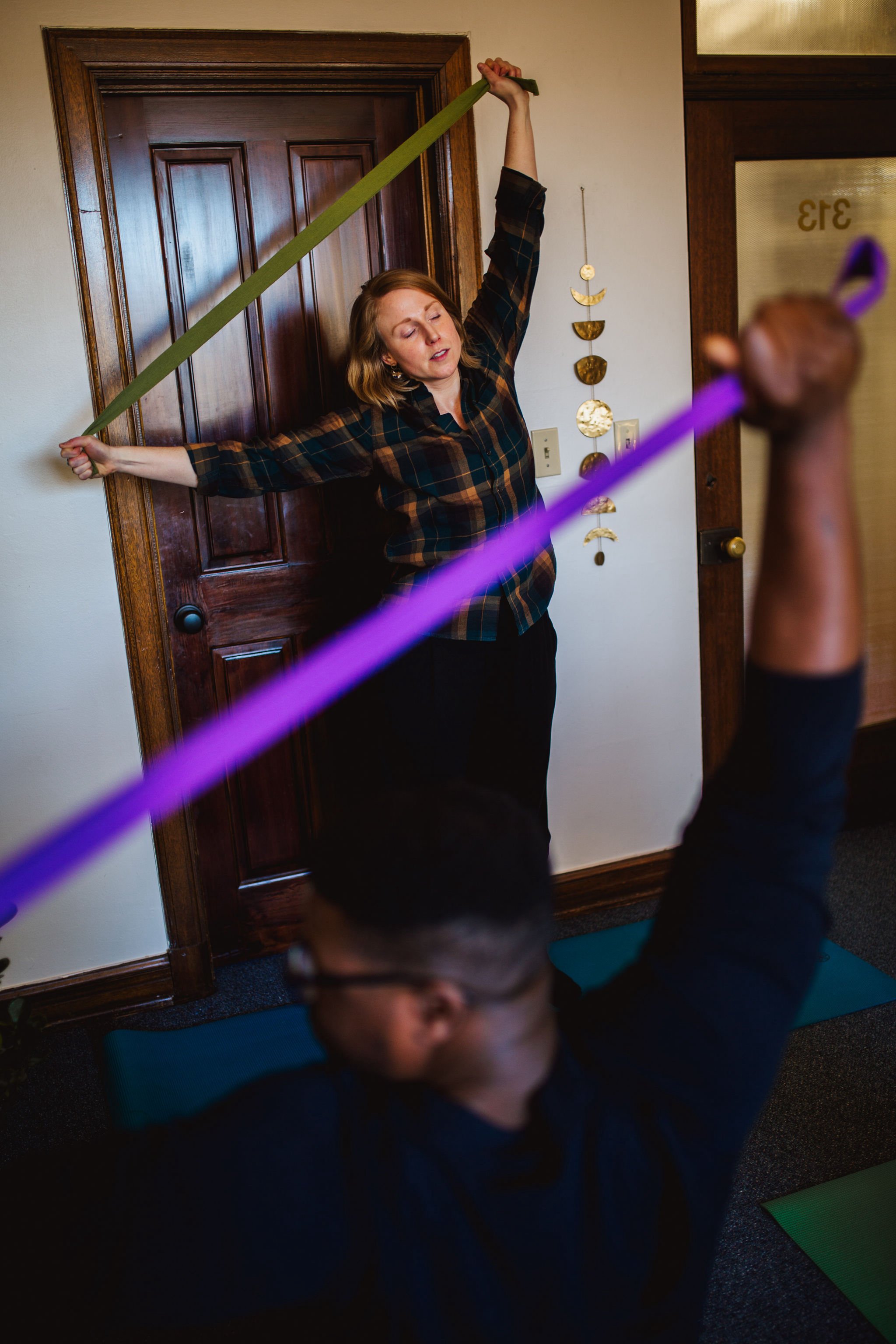

Somatic EMDR Therapy
Emotional numbness, anxiety, chronic tension, and disconnection are often signs of a nervous system that has been carrying too much for too long.
Traditional EMDR therapy targets the distress of traumatic memories. Somatic EMDR goes further — mobilizing and releasing stuck trauma responses in the body as an essential part of healing complex PTSD.
Together, we'll turn toward your felt experience rather than override it, restoring the mind-body connection and building your capacity to sit with dysregulation without panic or shutdown.
Explore my Somatic EMDR page to learn how immersive extended sessions support deeper healing in less time.
-
Extended sessions are ideal for my depth therapy clients who are ready to fade out from their weekly appointments due to sustained progress. Using trauma-informed therapeutic techniques and somatic EMDR, we’ll gently release any tension, memories, or pain stuck within your body and mind. This work can be helpful to those who:
1. Have been in group or individual therapy with me in the past and are seeking focused, intensive support
2. Feel stuck in their ability to change their beliefs through talk therapy
3. Have childhood, pre-verbal or intergenerational complex trauma
4. Live in the Seattle area and want to make the most out of the commute

Ketamine Assisted Psychotherapy
Ketamine-Assisted Psychotherapy (KAP) is a well-researched and effective therapeutic method that combines low to moderate doses of ketamine with therapy to enhance treatment outcomes.
If other methods haven't provided the relief you're seeking, KAP may be for you. By temporarily softening psychological defenses, ketamine creates space for deeper self-reflection and emotional processing —
Disrupting rigid beliefs
Forming new neural pathways
Facilitating lasting change
Many clients experience profound shifts in outlook and well-being as a result.
Visit my Ketamine Therapy page to see if KAP might be a good fit for you.
-
KAP can be particularly helpful for those who:
Walk through life with a ‘narrow’ focus and may have been perceived as judgmental, even if they don’t see themselves that way.
Struggle to ‘zoom out’ and see others' perspectives with gentleness or softness, especially when they disagree with others' choices.
Feel suffocated by self-sabotaging beliefs.
Understand that there is no ‘quick fix’ or ‘magic pill,’ and view KAP as an additional resource for healing, complementing the work done in traditional therapy.

Ambiguous Loss: Somatic Grief Group
A small, carefully held space for collective healing — where the body's wisdom is trusted and all parts of your experience are welcomed.
Grieving in community dissolves the shame that keeps grief hidden, reminding you that your responses are human and meaningful.
As grief is metabolized together, participants often find deeper presence and a renewed sense of belonging.
Investment: Varies by offering. View upcoming groups here.
-
Sessions will include discussion, embodied practices, skills, and processing facilitated by me. These groups are a safe and inclusive space where you can share, reflect, show up fully, and cultivate safety within. The more we become curious about our inner experience, the greater our capacity to turn toward one another and connect with our shared humanity.
My Specialties
Shame
Shame arises when you reach for connection and are met with rejection. When joy goes unmatched or vulnerability goes unseen. It shows up as humiliation or turning away from what we long for. Shame cannot be healed in isolation. It softens only in relationship, where its roots in grief can finally be tended.
Traumatic Loss
Grief is the response to losing safety, losing the familiar, and the struggle to adapt to a new reality. Complex loss lingers without the meaning or adjustment that restores heartbreak. Signs of unresolved loss may include persistent withdrawal or a feeling stuck in a surreal dream you can’t wake up from.
Stress & Overwhelm
Scattered, anxious, fatigued? Unable to chill out after work? These cycles may show up as perfectionism, overperforming, or urgency you can’t turn off. Effective stress management works with the body, not against it. Somatic therapy will help you find genuine rest, experience joy, and trade performance for integrity.

Therapy with Me
Is honest, playful, and practical.
Has therapy ever felt too surface-level to make a difference?
You're still not having the conversation you keep rehearsing. Still overextending. Still saying yes when every part of you says no.
Depth work means building the capacity to turn toward the reality you've been avoiding — then take real steps to change it.
My therapeutic frame is sturdy and reliable. A place to show up unedited. To do the hard thing imperfectly. To become someone you trust.